Ellee Seymour

MCIPR, PRESS CONSULTANT, JOURNALIST, POLITICAL AND PR BLOGGER.

November 5th, 2006

What will Saddam’s death mean to Iraq?

With tyrant Saddam Hussain sentenced to hang, what difference will this make to Iraq’s future?

Will it mark a turning point towards a more peaceful democracy? Or will his supporters seek to avenge his death, with Iraq continuing to self-distruct?

I fear the latter will happen, it will be inevitable, and sectarian violence will continue to force the bloodied and battered country to the brink of civil war.

Saddam was given a fair trial, unlike that meted out to the thousands of innocent civilians who were tortured and murdered under his barbaric rule, and many brave judges and lawyers were assassinated in this quest for justice. And although I do not support capital punishment, there is no other sentence suitable for such a monstrous man, this has to be an exception.
Here are some responses to Saddam’s death sentence: the Spanish Prime Minister is not in favour of the death penalty, but offers no alternative suggestions, the Russian spokesman does not believe the death penalty will be carried out, and the French Prime Minister seems quite detached about it.

Do let me know your views to this, and Iraq’s future, can it ever look forward to becoming a stable and peaceful country?

IRAQI PRIME MINISTER NOURI MALIKI

Maybe this will help alleviate the pain of the widows and the orphans and those who have been ordered to bury their loved ones in secrecy, and those who have been forced to suppress their feelings and suffering, and those who have paid at the hands of torturers, and those who have been deprived of the basic human rights, like education and profession.

US AMBASSADOR TO IRAQ ZALMAY KHALILZAD

Today is an important milestone for Iraq as the country takes another major step forward in the building of a free society based on the rule of law.

Although the Iraqis may face difficult days in the coming weeks, closing the book on Saddam and his regime is an opportunity to unite and build a better future.

UK FOREIGN SECRETARY MARGARET BECKETT

I welcome that Saddam Hussein and the other defendants have faced justice and have been held to account for their crimes.

Appalling crimes were committed by Saddam Hussein’s regime. It is right that those accused of such crimes against the Iraqi people should face Iraqi justice.

Today’s verdicts and sentences by the Iraqi Higher Tribunal comes at the end of a trail during which evidence has been offered and challenged in the full glare of media scrutiny.

SPANISH PRIME MINISTER JOSE LUIS RODRIGUEZ ZAPATERO

Saddam Hussein, like any other citizen or political leader, has to answer for his actions, for what he has done in his government task.

It is well known that for a long time the EU has not been in favour of the death penalty. Obviously it is a penalty which is not provided for in any legal system in the EU or, of course, in our country.

KONSTANTIN KOSACHEV, FOREIGN AFFAIRS COMMITTEE CHAIRMAN OF RUSSIAN DUMA

Today’s ruling was quite predictable, given the attitudes to Saddam Hussein’s regime that exist both in and beyond Iraqi society.

The punishment was deliberately chosen to be the harshest. It is another matter that the death sentence will clearly split Iraqi society still further.

On the other hand, I think that the death sentence on Saddam Hussein is unlikely to be carried out. It will be stopped one way or another, either at the level of the Iraqi president or by other means.

This is more of a moral ruling, revenge that modern Iraq is taking on the Saddam Hussein regime.

FRENCH FOREIGN MINISTER PHILIPPE DOUSTE-BLAZY

France notes the sentence made by the Iraqi court at the end of the Saddam Hussein trial. This decision belongs to the Iraqi people.

In the climate of violence Iraq is currently experiencing, I hope this decision will not lead to new tensions and that the Iraqis will show restraint, whatever community they belong to.

November 5th, 2006

Do English queens make better monarchs than kings?

The evidence seems to undoubtedly suggest that queens make better monarchs than kings. I wonder why they have apparently been more successful at ruling countries, as well as empires, than their male counterparts.

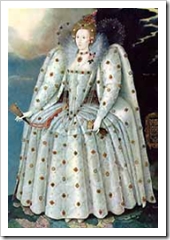
Queen Elizabeth 1 reigned for 45 years and was 25 years old when she inherited the throne, remaining unmarried and childless which was also a very bold move in the 16th century. She is renowned for saying that although she had “the body of a weak and feeble woman”, she “had the heart of and stomach of a king.”

Queen Victoria was 18 when she took over the throne, following the three previous disastrous reigns of George 111, George IV and William IV, described respectively as “a lunatic, a profligate and a buffoon.”

She reigned for 64 years and left the monarchy considerably stronger than how she found it.

Our present monarch has reigned for 54 years, again she was young, only 26. Although the popularity of the monarchy is now in decline, she is one of our greatest assets and is overall much admired.

Maureen Waller is in no doubt that English queens have made better monarchs than our kings, outlined in her latest book Sovereign Ladies, The Six Reigning Queens of England, and I agree.

I wonder what qualities our queens have had that made their reigns so durable and successful, perhaps they are better listeners and decision makers, perhaps they focused more on their job and were excellent moral role models. They obviously had to work to assert and prove themselves in a man’s powerful world.

What characteristics do you think our queens have had to make their monarchies so outstanding? Are they any unique feminie traits that give them the edge? What can Prince Charles make learn from this when he eventually follows in his mother’s footsteps, how will he compare?

|