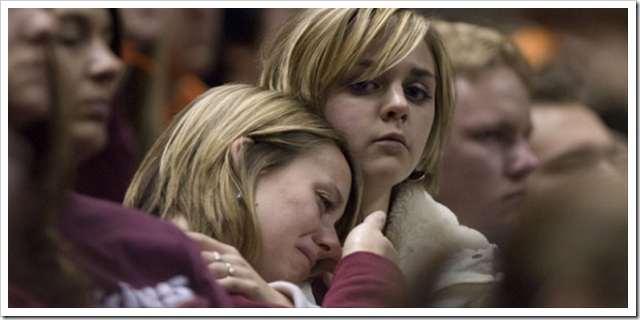
How private is the personal anguish of students who have published their grief on the Web following the Virginia Tech massacre? Many of their accounts have been highlighted in worldwide media reports. But some feel the press has been too intrusive.
Never before has the Internet been so high profile during a crime following the merciless slayings in Virginia Tech. The whole world can have instant access into the killer’s warped and very troubled mind, we can read this violent one-act play which Cho Seung-Hui’s wrote, based on a 13-year-old boy who accuses his stepfather of paedophilia and murdering his father. It ends with the man killing the boy. The tone is aggressive throughout and full of hatred.
Fellow students, stunned and shocked, have been pouring out their grief on blogs and Facebook. Reporters have scoured blogosphere to track down these personal outpourings of grief to provide witness accounts of the tragedy.
But according to some Web reports, they have overstepped the mark. The San Francisco Chronicle describes how students have been flocking to social networking sites, and that some are disgusted with journalists checking out blogs and social networks for their personal accounts:
Journalist Robin Hamman gives an excellent first-hand report about his personal experience on Cybersoc.com , describing how he had passed on such info to BBC News Online and BBC Radio 5 Live, and was then asked to confirm it with the author; other journalists jumped on the bandwagon too, some not displaying any sensitivity or tact. It is really fascinating stuff:
“I wasn’t the only person working for a news agency who yesterday turned to the blogs to find stories. In fact, an astonishing number of journalists tried to make contact with the author of the post by commenting on it - below are some of the approaches:
and
“I’m sorry to hear about what has happened today. I am a news reporter at The Guardian newspaper in London and we are hoping to get in touch with students who could give us a little more detail about what went on. We are also looking for blogs about what happened that we could post on our website. If you felt comfortable discussing this all further, please do get in touch. My email is [email]”
TextualDeviance, a student journalist, warns journalists to back off:
“On behalf of all journalists with some sense of professionalism, I apologize for the nitwit reporters pestering you for comment. I’m disgusted by this behavior and hope to work toward ridding the profession of it. Proper news reporting is too important to a democratic and civil society for it to be left up to soulless hacks just looking for some shred of an exclusive quote on a big story.
Seriously, folks. The Boston Herald? Papers in Australia and the UK? IN TOUCH? You guys don’t need this story. Get the damn syndication from the local papers. Pick up the (terrific) coverage by the Collegiate Times. Don’t assume that you have any business covering a story like this when you don’t normally cover this region. Back the hell off, or you risk alienating even more people from legitimate news coverage.”
Blogs and social networking has opened up fantastic news sources and unprecedented access from witnesses who describe their experiences of horrific events on the Web. They may not intend them to be later published by the worldwide media, but it is impossible to avoid. I imagine this is a hot topic for trainee journalists today.


