Ellee Seymour

MCIPR, PRESS CONSULTANT, JOURNALIST, POLITICAL AND PR BLOGGER.

October 4th, 2007

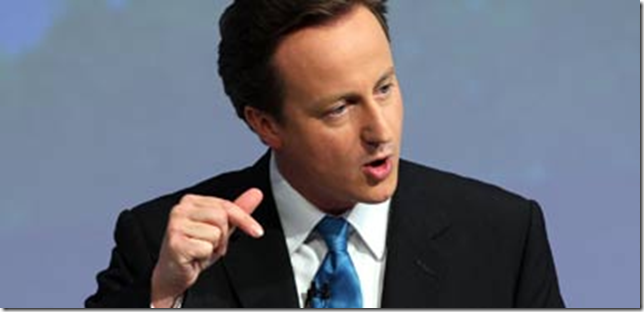
David is on the "write" track to win

image

I always had beautiful handwriting until I started learning shorthand. I dread to think what a graphologist would make of it’s shapeless, sprawling angles, what conclusion would be drawn from it about my character.

It is a subject I find intriguing. The Times also thinks so and managed to obtain David Cameron’s notes following his blinding off-the-cuff speech yesterday.

They asked Elaine Quigley, a psychologist and editor of the Graphologist journal, to give her views - and the outcomes are much more reassuring compared to a similar test carried out on Gordon Brown’s handwriting. She concluded:

“The writing is spare and clean, presumably for ease of reference, but the dots and crossbars of the letters also show a close attention to detail and focus.

“Despite being rough notes, he has not abbreviated anything and is consistent in style – which is perhaps a product of his education. The lack of curls on his “y�s or “g�s show a lack of emotion and suggest he does not like making grand dramatic gestures.

“There is a sense of sincerity that this is what he believes, and he shows signs of being very thoughtful and deliberate in his aims.�

“These notes could not be more opposite to those of Tony Blair,â€? she said, but added that contrasts with Mr Brown were less obvious.”

However, when George Osborne had Gordon Brown’s handwriting analysed, the conclusions revealed:

“The writer is not shy. The writer shows unreliable and poor judgment. The writer was not in control of their emotions and instincts at the time of writing.

“There are signs that the writer is someone who does not like to give a clear-cut image of himself. There are signs that the writer can be evasive.�

Well what do you make of that, and how would your handwriting match up to scrutiny?

October 4th, 2007

Revealing inner emotions on National Poetry Day

I’ve been drafting a press release today for CHASTE - Churches AleChaste 2rt to Sex Trafficking in Europe - in response to yesterday’s announcement by Home Secretary Jacquie Smith about the police crack down on human trafficking .

I happened to mention that today was National Poetry Day. So CHASTE’S inexhaustible founder and chief exec, Dr Carrie Pemberton, suggested I publish a poem from their recently published book entitled Not for Sale: Raising Awareness: Ending Exploitation, available from their bookshop here.

This poignant poem, called Dog-girl, describes the feelings of a sex-trafficked girl, and was written by Lucy Berry:

Dog-girl

When you are a dog,

You watch your master all the time.

If he comes close

I look at the ground.

If he strokes you

You are happy it is not a beating.

Dogs cannot think.

Thinking is not for dogs.

When you are a dog

You obey straight away.

Come here.

Lie down.

Roll over.

If you are good

You get to eat and to sleep.

If I am not good

He beats me with

The lead from the kettle.

This is all a dog can expect.

I am a dog now.

There is a little park

Away through the alley

Which my window looks down through.

Dogs run there, no leads, playing.

But I am frightened of sticks.

Lucy adds:

Poetry is only worth reading (or writing) if it says something more intensely than prose can. By that, I don’t mean that all poetical topics have to be ‘heavy’. But the function of poetry is to feel more accurately/ authentically what you already thought you knew about - or to sense something entirely new. This poem about the sex-trafficked girl; could it have produced the same response in prose?

Lucy is absolutely right, poetry allows a more intense portrayal of emotions to be crafted.

What is your favourite poem? I must admit that since school I have read very little poetry, though I always enjoy delving into my local romantic hero, Rupert Brooke.

|