Ellee Seymour

MCIPR, PRESS CONSULTANT, JOURNALIST, POLITICAL AND PR BLOGGER.

Boris 1boris 17boris 16boris 12boris 13boris 15boris4boris2boris 6boris 7boris 9boris 11boris 3
November 30th, 2007

Mobs demand death over teddy’s name

image

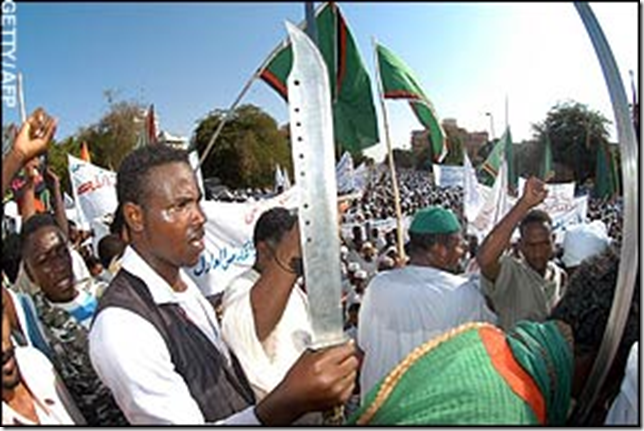
How much worse can this unbelievable situation get? This picture of mobs wielding clubs and knives today in Khartoum looks terrifying.

There are demands that her 15 day jail sentence was too lenient and that she should be shot.

The great thing about British law is its emphasis on the word “intent”, and clearly Gillian Gibbons had no intention to be blasphemous by naming a teddy bear Mohammed at her pupil’s suggestion.

Yet this mob’s anger was dangerously being inflamed by a leading cleric stating she had deliberately named her class’s teddy bear Muhammad “with the intention of insulting Islam.” Clearly that word carries some importance over there too.

All this could have been avoided if someone at the school had stepped in and prevented the teddy being named Muhammad. They could have had a quiet word with Gillian and prevented an international catastrophe from taking place.

I imagine many people in the Sudan are opposed to the hysteric demands of the mob. This letter describes the changes that have taken place in the country under military dictatorship, described as “degeneration”.

As an alumnus of Unity high school in Khartoum, I am saddened by the shameful treatment of Gillian Gibbons (’My name is Muhammad’ - school project leaves British teacher facing 40 lashes, November 27). Unity is the best school in the city, and has stayed true to its founding principles of academic scholarship and a deep respect for other cultures and religions - important in a country as divided as Sudan. This incident exemplifies the degeneration of the country into one in which tolerance and the pursuit of knowledge have no place, and where religious zealotry, corruption and greed are the only currency. Central to the charges against Gibbons are accusations of blasphemy on the grounds of idolatry. In the time of early Islam, the restrictions on religious idolatry were seen as a key part of the prophet’s crusade against the jahiliyya (forces of ignorance). With the coming to power of the military dictatorship, widely acknowledged to be a front for Islamic fundamentalists, Sudan entered its own jahiliyya, and the repercussions have been the detention, torture and harassment of its citizens, the prolongation of the war in the south, and the ethnic genocide in Darfur.
Dr Halima Izzeldin Ali Amer
London

November 30th, 2007

Government urged to support families of the missing

image The anguished mother of a image missing son is urging the government to provide desperately needed support and additional police training to deal with these unfathomable cases.

Nicki Durbin, mother of Luke (pic left) who vanished in May 2006 aged 19, and Valerie Nettles, whose son Damien (pic right)disappeared mysteriously in November 1996 when he was 16, are teaming up with other families of the missing to hold a peaceful march in London next March to highlight their plight, as well as pleading with the government to provide much needed resources.

Nicki told me:

"Whatever the circumstances are that a person may go missing, it is a living nightmare for those left behind. For all families, who have a family member that has gone missing, we are asking for the government to help and support us in this dilemma. It can no longer be left to the family and the local authorities to handle these cases.

"We would like the government to address this problem by passing a Bill for the ‘Missing’ and to make available funds to support and counsel and advise the families left behind to deal with this dilemma.

"We want to highlight the fact that there are thousands of families going through the loss of a loved one who has gone missing and that we exist and have existed, some of us have been fighting this battle for many years with little support or resources.

"If families of the missing can join together with pictures of their missing family member, it will present to the government how large scale this phenomenon is and how many lives this affects. There are limited resources to families left behind in the form of the charities that currently exist, but the problem is bigger and the resources are not there for the long term and we would like to see the government make these funds available to such an organization so that the help is there when it is needed for those left behind and alone to try to put lives and families back together as best they can."

How can the government deny such a request? It would be inhumane to ignore the broken hearts of these devastated families. Government is made up of parents, after all. We have to remember little Madeleine too, and the anguish her family are enduring.

I really admire Nicki and Valerie so much. Nicki asked me who she should contact at government level regarding this. I suggested Ed Balls, our Secretary of State for Children, Schools and Families. And then there is Gordon Brown, of course. I shall ask Nicki if I can publish the letters she writes to government, and the responses she receives.

Nicki adds:

"There is no support group for families of the missing. The charity Missing People are brilliant but they have had their funding hugely cut by the government - remember they are the only organisation in the Uk for Missing and the families left behind. Missing People wish to be as dynamic as their service users but they are tied by their resources. They recognise the need for a support group for the families and are currently doing research into it.

As I am sure you must know through your own research of missing, when a child goes missing, regardless of age, gender or circumstance the parents and families left behind enter an alien world. There is nowhere for them to turn for counselling or coping strategies - the staff at Missing People are fantastic but they acknowledge they are not trained to support in that way. Also, no one understands like a person going through the same hideous ordeal. So initially from the government we wish to secure funding so Missing People can facilitate a support group for the families left behind.


The other issue that has cropped up with many families (not all), that Val and I have spoken to is the way the police handled cases of the missing in the early days.

"There is undoubtedly a prejudice on class and gender in missing persons cases. One woman I have spoken to lives in an inner city and has a broad Cockney accent, her daughter had been in a lot of trouble before she went missing. She felt that the police and media would not take her seriously. Her daughter has now been missing 9years! So we feel that better and uniformed training for police throughout the country in dealing with missing cases is crucial."

In memory of those who are still missing.

November 30th, 2007

How can Obama defend himself over terrorist slur?

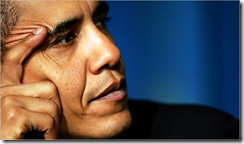
Would you vote for Barack Obama if you thought he had image terrorist links? Of course not. So how can the presidential hopeful defend himself against this slur, should he sue the respected Washington Post for insinuating that he is a Muslim extremist who wants to overthrow the government?

I know politicians must have a thick skin, but instilling imagined fear in people’s minds over threats of terrorism is sinking lower than any sewer life.

Bob Cesca describes this technique as ratfucking, an American slang term for political sabotage or dirty tricks, which is used to manipulate rumourmongering to cause fear.

This is what the WP said about Obama, a committed Christian who describes his beliefs here:

Despite his denials, rumors and e-mails circulating on the Internet continue to allege that Obama (D-Ill.) is a Muslim, a “Muslim plant” in a conspiracy against America, and that, if elected president, he would take the oath of office using a Koran, rather than a Bible, as did Rep. Keith Ellison (D-Minn.), the only Muslim in Congress, when he was sworn in earlier this year.

So how is it that in this article, Obama is quoted as saying he would “consider bombing the sacred places of Muslims in order to avoid a nuclear attack on his soil”.

Cesca points out that any first year journalism student knows that the phrase “despite his denials” implies a certain level of guilt, as if Senator Obama has been forced to repeat that he’s not an Islamic terrorist wherever he goes.

Should responsible newspapers repeat lies spread on the internet about politicians? I think Obama should sue the WP to squash these unfounded and malicious rumours, especially as they could have a significant effect on his chances. In an August poll by the Pew Research Center for the People and the Press, 45 percent of respondents said they would be less likely to vote for a candidate for any office who is Muslim, compared with 25 percent who said that about a Mormon candidate and with 16 percent who said the same for someone who is an evangelical Christian.

November 29th, 2007

How will we be living in 2030?

Can you imagine what life will be like in 2030? What image changes image will technology and medicine have made to our lives? Do you fancy living to 130?

Futurologist Ray Hammond has come up with some answers in a thought provoking book entitled The World in 2030.

My thoughts are that cars will be banned from cities, there will be taxes galore for global and local environmental projects, we will live in more confined spaces, we will have less freedom of thought/actions - and I will be struggling to survive on a meagre pension, still having to work in my 70s. Maybe those who live in properties with empty rooms will have to offer them to the homeless caused by our booming population. And of course, climate change, drought stress and concerns about growing sufficient crops to feed us all.

Here are some Raymond’s predictions, the references to plastic are made because the book appears to have been sponsored by PlasticsEurope.

  • By 2030, one billion people will be 65 or older. In Japan scientists are developing robots made out of advanced plastic materials to look after the elderly (taking over repetitive tasks) and robots will be a permanent feature of everyday life all across Europe.
  • People will be wirelessly ‘tagged’ for their protection. We will transmit our locations constantly. Data about on our health will be collected and transmitted and, if we are taken ill, help will be summoned automatically.
  • A revolution in medicine will have occurred. Personal DNA mapping, powerful new gene therapy drugs and stem cell research will mean that medicine will prevent illness and extend life. With plastics playing a large part in healthcare, people in 2030 will reach the ages of 130+
  • The weather in 2030 is likely to be extreme. The solution to the energy crisis will be to harness natural, clean energy sources (in the sun, wind, oceans and rocks)
  • The internet will have developed into a ‘super combined web’ – always on, everything connected. People, our pets and trillions of inanimate objects will communicate wirelessly every second of the day. It will deliver 3D holographic experiences, tactile simulations, odours and tastes
  • Some aspects of daily life in 2030 will seem very similar to today. We will live in houses and apartments as we do today (with many properties upgraded to maximum energy efficiency, thanks to plastics), and children will still go to school – supplemented by virtual learning

None of these predictions seem very attractive, it is quite a gloomy outlook, I wonder what can we look forward to in 2030? I don’t particularly fancy a wired up pet. I wonder how many times I will say those words which we scorn so much: "in the good old days …"!

Let’s make the most of them now while we have them.

November 28th, 2007

Caretaker’s home used to teach migrant children

So how can we teach our migrant children which turn up on our image doorstep? What thought did Tony Blair give to this when he opened our doors to their families?

Just to let you know what is happening in Fenland, my home patch, where a secondary school has resorted to using a caretaker’s house to cope with the demands of teaching English to children from migrant families.

The property became vacant when a new caretaker was taken on who lives nearby and the upstairs is being used as a classroom while the ground floor is used for one-to-one coaching.

More than 100 pupils speaking about 17 different languages have joined the school in the past two years, for which it has so far received no extra funding. Nevertheless, the headteacher has employed a teacher and two specialised teaching assistants, which is costing about £50,000 a year in wages alone. He admits to feeling let down by the lack of support from government and said:

We have got to provide for these young people who have very different needs. Of course they are welcome to this town and the school, but there isn’t any extra educational funding being provided for these youngsters.

“Some of the children that now speak English also need extra coaching to achieve higher grades.”

“Many need higher level coaching, which means we need a whole range of different help. The problem is massive.”

These pupils will also have to meet our educational targets, it’s such a nightmare for our dedicated teachers and I really sympathise. I wish the school heads luck who are applying for extra resources.

In a fair democracy, you wouldn’t have to ask, this situation was totally avoidable by having foresight and planning ahead.

November 28th, 2007

How good is a $100 laptop?

image 

Can you imagine the excitement of these young Nigerian school children who have been given a $100 laptop each as part of the One Laptop Per Child (OLPC) programme in Africa. Some of them don’t even have a television at home.

Their local community built their school, now well worn, from imageplaster, wood and tin. It educates 150 students and three classes are crammed into the two-room building.

The 10 and 11-year-old students are lucky to share three books per academic subject, as well as having a clock, bell, wall calendar, and science equipment consisting of a lever. Students in less fortunate schools might share three books in total.

But Nigeria’s Education Minister Dr Igwe Aja-Nwachuku has questioned whether it was appropriate to provide laptops "when they don’t have seats to sit down and learn; when they don’t have uniforms to go to school in, where they don’t have facilities."

Walter Bender, President of One Laptop per Child (OLPC) said their politicians were unwilling to commit because "change equals risk". He said, there needed to be a "dramatic change" because education in many countries was "failing" children.

The computers have been specially designed for use in remote and harsh environments where there is little access to electricity or the internet. There have been "aggressive" attempts to undermine the charity, which planned to sell the laptops to governments in lots of one million for $100 apiece. But it appears they are not buying in as hoped, with reports that a researcher from the Indian Institute of Science has designed a laptop that can be produced for $47 and sold at small volumes.

The fact is that the internet is going to open up these children’s eyes to a totally new world, is this something the Nigerian government is prepared for too? I can see why it seems incongrous to provide new technology while school kids are deprived of the basics? Isn’t that worth it for access to new knowledge?

I do urge you to watch this wonderful video link recording the school - 63 excited pupils in the class - with their laptops, which is described as "a souvenir from God". Is it really a gift from the Gods? Or do you just get what you pay for? Can it be so good when it costs so little?

The kids certainly enjoy the games. And what child doesn’t?

November 27th, 2007

NIAB welcomes support for GM crops

It takes a brave man to speak out on unpopular subjects, like image Sir David King did today, when he supported the need to use GM technology and research for future crops.

Still, as the comments were made in his last speech in his capacity as the government’s chief scientific adviser, he knew it was too good a chance to miss to put across his views.

This is a press release I have issued for NIAB, which welcomed Sir David’s vision:

NIAB WELCOMES GOVERNMENT SCIENTIFIC ADVISER’S SUPPORT FOR GM CROPS

The National Institute of Agricultural Botany has today welcomed an announcement made by Sir David King, (pic),the government’s chief scientific adviser, in support of GM technology and its research to help develop new crops.

Cambridge-based NIAB is the only plant science research organisation in the UK which has this year conducted research on GM crops, a field trial for blight resistant potato. There are none currently being carried out in Britain.

Prof Wayne Powell, NIAB’s Chief Executive and Director, hopes Sir David’s endorsement will be heeded by the nation. He believes Sir David was correct in warning about the future need for GM crops to cope with an increasing global population, water scarcity and potential food shortages.

Prof Powell said:

“GM science and technology provides huge potential benefits and we should be grabbing these opportunities with both hands. Our regulating framework is the tightest that exists and Sir David is correct in stating that there can be more risk involved with eating ordinary food than GM food.

“NIAB has competency, capability and independent governance which allows for development of this new technology to be done safely. Trials are carried out under very stringent conditions in accordance with DEFRA’s regulations. Our science based evidence can provide crucial information to help decision makers.

“Unless we grasp the technology and have confidence in the regulatory system, then we will go through a huge innovation bottleneck where opportunities that have been created are not going to be exploited. People are shying away from exploiting this technology, they are going abroad instead.

“GM technology is crucial as the way forward to help feed the world, particularly those in drought stricken countries like Africa, and our independent research is looking at ways of achieving this at a time when farmers face increasing challenges from drought stress and climate change.

“I also strongly believe that the food produced in the UK should be trialled and evaluated here, and not abroad. We have the scientific skills and I have every confidence that our scientists could lead the way in this.”

November 27th, 2007

An update on Loula

My mum is still in hospital where further tests are being carried out as some results caused concern. The main thing is that her spirits have improved.

I was waiting at the front door of the hospital when she arrived to be admitted last night, she had travelled there with my sister Rosalind. She looked very rough, but pride in her youthful appearance made her insist on vehemently refusing a wheelchair to be taken to her ward. She looked at it with total disgust as if to say: "over my dead body".

The medical assessment ward turned out to be mixed, I didn’t think they still existed, and that was initially a shock. I don’t think my mother would have objected had the male patients been dishy, but they were not the type to attract Loula’s flirtatious attention.

She was then asked 101 questions by a nurse and Loula’s weak and despairing countenance swiftly changed to one of wickedness and joviality. She did not realise they were routine questions and found it very offensive to be asked if she used a hearing aid, walked with sticks or a frame, and about the amount of alcohol she drank.

My mum is virtually teetotal, but her answer was defiant:

"Can’t you tell I’m an alcoholic!"

She responded similarly when asked about smoking:

"It’s never too late to take up a bad habit!"

That’s the mood my mum was in last night, I think she has since calmed down. Like me, my mother is a people watcher and she has keenly been eyeing up the dishy doctors. She was telling me about them on the phone this morning when I called her.

My mother is very proud and ageless. She wants to remain glamorous and youthful for ever and will never wear sensible shoes, they have to be totally unsuitable to win her approval.

Her motto is: "Live and love your life away…"

Yes, let’s hope she can continue to do this for many years to come. Now you can see how she leads me astray ….

Update 8.30pm: I’ve just had a phone call from a deliriously happy Loula telling me she is on her way home. But will she be a good girl and do as the doctor tells her? I give you one guess.

November 26th, 2007

An emergency hospital trip

Greece 2007 064 I am now heading off to the Queen Elizabeth Hospital, King’s Lynn where my mother Loula is being admitted this evening for tests because of her heart and breathing difficulties.

She lost her zest for living five years ago after dad died. Now she never looks after herself, dresses warmly or eats well. "What is the point?" is all she ever says.

I spent Saturday with her and pampered her the best I could. I had to call the doctor out to see her last week when she complained of severe pains, and I thought she was improving, but she has now taken a turn for the worse. She lives by her own rules and wouldn’t take the medication the doctor prescribed because she felt she was already taking too many pills.

I wish she would come and stay with me, but she refuses, she likes to be in her own home. But all she does there is worry about something. As she is Greek, I can now understand how her ancestors came to invent the Greek tragedy!

I hope to report back with more positive and cheerful news. I know everyone says this about their mum, but Loula really is one in a million. In fact, that’s not true, as anyone who has met my mum will vouch, she is one in a trillion!

This is a pic I took of my stunning mum during our trip to Greece earlier this year. I very much hope we will have many more together.

November 26th, 2007

Could rich countries be sued for climate change?

Could the poorest countries in the world sue imagethe rich, polluting countries which are deemed to be responsible for climate change by producing excessive carbon emissions?

The Make Wealth History blog tells us that the Bonn Agreement in 2001 recognised that developed countries were largely responsible for climate change and should pay towards alleviating its effects in poorer countries, with several countries promising money, and which we haven’t paid.

It’s not the first time this question has been asked, it was raised in 2001 when a Stephen Timms (is this Stephen Timms MP? I doubt it as Labour had no policy on climate change in 2001) of the New Economics Foundation stated that under the UN international law commission’s draft declaration on state responsibility, US greenhouse gas emissions could constitute an international crime. It is estimated that climate change could cost developing countries up to £6.5 trillion over the next 20 years.

“..all industrialized countries whose emissions are, per person, above a sustainable threshold should be looking over their shoulders. The next message G7 heads of state receive from their poorer cousins may not be an invitation to a reception, or a plea for more aid. It may be much more abrupt: “We’ll see you in court for global warming.”

Make Wealth History asks:

“If we are demonstrably responsible for damage happening now, what’s to stop us being sued for our abuses? Does anyone know of a historical precedent for this?”

Such a case would be a legal minefield and drag on for years. Although it might seem an impossible thought now, whose to say it might not happen in 20 or 30 years time?