Ellee Seymour

MCIPR, PRESS CONSULTANT, JOURNALIST, POLITICAL AND PR BLOGGER.

Boris 1boris 17boris 16boris 12boris 13boris 15boris4boris2boris 6boris 7boris 9boris 11boris 3
January 17th, 2008

Could King’s Cross cope during a terrorist attack?

image I have serious worries about how King’s Cross would cope if there were to be another terrorist attack. I was at the station last night when all trains in and out of the station were cancelled due to signal failures.

As you can imagine, it was chaos.

If King’s Cross cannot communicate and immediately operate an effective emergency strategy in these circumstances, what chance do we stand against Al-Qaeda’s bloodthirsty bombers?

Commuters are very patient, too patient, and can understand if there have been technical problems. But they want to be given clear information about what is likely to happen next, how they will get home. This very basic right is denied them because rail staff are not informed themselves; and therein lies the crux of the problem - devastatingly poor internal communications which lacks any joined up thinking.

This is what happened to me. I arrived at King’s Cross via the underground just before 7pm to find it heaving with frustrated commuters and CANCELLED signs posted on all departures. No information was flagged up anywhere at that time about reasons for the delay, the gigantic television screen was still promoting slinky Audi cars instead of being used as an emergency communications system. I understand the problems started around 5.30pm.

One member of staff told me it would all be sorted in 10 mins, another said 30 mins, one advised me to try getting to Liverpool Street Station, another remembered that the King’s Cross underground had been closed and I couldn’t get to Liverpool Street unless I took a taxi. An elderly woman has a panic attack and collapses through fear of not getting home and an ambulance is called.

I am advised that trains for Peterborough and Cambridge (my desitnation) will leave around 7.30pm for Alexandra Palace where further information will be given, and that I should head for platform 9 - that is myself and what seemed like 1,000 others, all scrambling for standing room, even if it means standing on one leg. We inch further and further along the carriage until there isn’t even enough room to lift up a hand and answer a ringing mobile phone. The train remains stationary in this position for an eternity, then moves slowly, and slowly.

At Alexandra Palace, a loudspeaker tells us that Cambridge commuters should catch a train for Welwyn Garden City. I meet April and we team up as travel buddies, lost souls together. She is a buyer for Monsoon children’s clothes and wants to get to Cambridge too, having got up at 5.30am for her daily commute to the smoke.

At Alexandra Palace, we learn that commuters had been told to get on the train we had just disembarked for Cambridge. April and I decide to stay put. We didn’t know what to do next, so we caught the train to WGC. Only the train swung round a different loop and didn’t stop at WGC, so we had no idea where we were going to stop eventually, there was no loudspeaker information giving helpful advice.

I put my head out the door at some of the stations we stopped at and asked if I could catch a Cambridge train from there, but nobody knew, there were no signs anywhere, and everyone else was in the same boat.

Instinct and some local knowledge told me to get off at Hitchin where some commuters had been given compensation forms by staff who then went home, closing up the office. Of course, it would make sense to have extra staff on duty, but that does not happen. During my stop at Alexandra Palace and Hitchin, no staff were in sight at all. There were no compensation forms around for April and myself, or for the very tired woman who told me it had taken her five painful hours to travel from King’s Cross to Hitchin.

I heard one horror story after another from commuters. April says she has had enough and wants to jack in her job, she described yesterday’s King’s Cross’ organisation as being as being as bad as the day of the horrific July 7 bombings.

Everyone complained about the same thing, the lack of information. When we arrived at Hitchin, there were no departure times posted on the platform, we had no idea how long we were going to be stranded there. Many of the travellers had had no food for hours and it was now 9pm, we were tired, bleary eyed, cold, hungry and thirsty, yet in remarkably sane and good spirits, though we daren’t even go to the loo in case we missed an incoming train.

We were lucky that a train came within 20 mins and we both arrived at Cambridge safely. It then went on to Ely, my final destination and I arrived home at 10pm.

It was a very frustrating end to a great day for Julian Sturdy and his colleagues, including postmaster Aasif Rabbani, for whom this had been his first trip to London to hand in a petition protesting about the closure of his post office, and eventually arrived home after 1pm.

Will he ever want to return, I wonder…

Maybe you have your own commuter chaos story which is even worse, if so, do tell.

January 17th, 2008

No 10, Nick Robinson and the Mongolian ambassador

Who do you think was waiting for us when we arrived at No 10 image yesterday Downing Street 012with our post office petition? None other than the BBC’s political editor Nick Robinson, I wonder who gave him the tip off about our visit.

He was very charming and said he remembered me being on the Andrew Marr Sunday AM programme along with himself and other political bloggers (not sure I believe this) and happily posed for this photo with Julian Sturdy and constituency supporters Joe and Bill. Nick handed my camera to a photographer from The Observer who took this pic.

The actual presentation of the petition was over in a blink. Julian knocked on the door, a policeman opened it and took Julian’s file. There was no cup of tea on offer, that was it.

Shaun Woodward, Tory defector and Northern Ireland Secretary, and Douglas Alexander, International Development Secretary, walked out of No 10 as this was happening and nearly ruined my photo of Julian handing over his petition.

We then headed to nearby Portcullis House where MPs have their offices, and were escorted in by Labour MP John Grogan to save us waiting outside for our next appointment with Charles Hendry, Shadow Minister for Energy, Industry and Postal affairs. John had been photographed outside No 10 with Julian by the York Press for their own post office protest petition which they presented after ours.

Portcullis House is a place where you have to act cool when you see ministers and top politicians walking along the corridors and eating in the cafe. But I do love the buzz of the place, I always find it thrilling, and you never know who you are going to bump into.

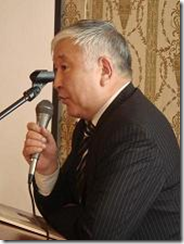
Who would have imagined that I would have been chatting to the Mongolian Ambassador Dalrain Davaasambuu (pic) who was meeting with John Grogan as chair of the all party parliamentary Mongolian group, explaining to him about post office closures.

The parliamentary group is hosting a business promotional event for Mongolia next Monday and one of John’s tasks is to ensure that Mongolian vodka, their national drink, will not prove to be fatal for MPs. He told me there had been 12 recent deaths in Mongolia from contaminated vodka, he could not risk that happening here! Will there be an official taster on hand, I wonder.

We then went into the House to listen to a debate on human trafficking, a subject close to my heart as you know, which would have been the perfect end to the perfect day, except for my nightmare journey home thanks to signal failures at King’s Cross when every train in and out of the station was cancelled.

Update 18 January: My story about Mongolia’s deadly vodka makes the Hugo Rifkind People column in today’s Times.

January 17th, 2008

Govt urged to apply for bluetongue funding immediately

A few days ago a Dutch vet warned that livestock farming in image East Anglia could be decimated unless a vaccine is available in time.

So it is very welcome news that the European Commission will co-finance a mass bluetongue vaccination campaign across the EU.

The plans, which include meeting the full cost of purchasing the vaccine and 50% of administrative costs, will be paid out of the EU budget. It is a huge relief to livestock farmers across the region who have been hit by repeated outbreaks of animal disease over recent years.

My MEP Robert Sturdy has been giving several media interviews about this today and urges the British government to immediately apply for bluetongue funding. He said:

“I urge the British government to apply for this funding immediately and to waste no time in securing the future of our livestock industry. Outbreaks of animal disease are no longer a case of ‘if’ but ‘when’ and the agricultural industry will need assurances that there are sufficient stockpiles of vaccination available.

“I am delighted with the announcement of the EU’s Health Commissioner Markos Kyprianou and hope the British government will take full advantage of his offer. Our government has repeatedly failed its agricultural community. Today is a chance to restore faith in the sustainability of the livestock industry.”