Ellee Seymour

MCIPR, PRESS CONSULTANT, JOURNALIST, POLITICAL AND PR BLOGGER.

September 30th, 2008

Discovering The Secret

I met an interesting woman called Carol on the train a couple of image image weeks ago and we chatted about life, work and books. She then asked me if I had read "The Secret" and was amazed that I hadn’t.

I was intrigued and ordered a copy which has just arrived. It has six million copies in print, which is phenomenal.

The Secret, by Rhonda Byrne, explains the centuries old law that is governing all lives. It reveals the secret to unlimited happiness, love, health and prosperity.

It believes that a number of exceptional people who discovered its power went on to become regarded as the greatest human beings who ever lived, including Plato, Leonardo, Galileo and Einstein.

In 2007, Byrne was listed among Time Magazine’s 100 Most Influential People in The World.

Is it just mumbo jumbo, or do you believe it?

Carol runs a successful business in Covent Garden and was radiantly happy. The Secret seemed to have worked for her.

September 29th, 2008

My hotel with a difference

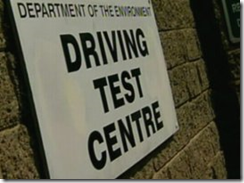
The hotel in Limerick where I stayed last week had more than the traditional spa and pool - it was also used as a driving test centre.

In fact, it is one of three test centres in Limerick, and maybe an explanation as to why some drivers there seemed to have no regard for motoring laws; stopping for long periods in yellow boxes and driving in image a rather cavalier fashion.

Up until recently, new drivers were given a provisional licence which allowed them to drive with a qualified driver. However, if motorists took a road test and failed it, they could apply for, and get, a second provisional license - and were allowed to drive unaccompanied!

Yes, I know it sounds bizarre, but that is how it was in the Republic of Ireland up until 1 July  when the law changed,  stating that no provisional licence holders were permitted to drive unless they were accompanied by a qualified driver who image has had a licence for more than two years. So all these failed provisional licence holders are now taking their driving test. It is believed that around 420,000 drivers are potentially affected - about 20% of all Irish drivers.

I  heard of one man who had just taken his test after having a provisional licence for 43 years. I’m not sure what the insurance situation would have been if any of these unqualified drivers had had an accident.

Noel Dempsey, Transport Minister, pushed through this new legislation to reduce road accidents involving young motorists. imageHe is a guy with a lot of common sense and was also the driving force behind the implementation of the plastic bag levy which has proved hugely successful in southern Ireland.

I was reminded about this after hearing a report on the news this morning that 17,000 young drivers in the UK are driving on the road after their licence has been revoked - though they may not be aware of it.

The reason is that if a new driver gets six penalty points  within his first two years on the road, it means he forfeits his licence. His first two years are regarded as a probationary period. He cannot then drive alone without retaking the driving test and then has to apply for a provisional licence and re–sit and pass all parts of the driving test again. Although this law has been out for 10 years or so, it seems few people know about it, or how to invoke it, according to what was said on the news.

September 26th, 2008

Two empty places round the dinner table

Jack Morley, 23 Jan 04 002

It is a time of great change in the Seymour household this weekend following the loss of two of its residents. The first came today when we had a shock following the unexpected death of our beloved cat Jack Morley.

Jack - named on a whim by my son James, a good pirate’s name - was found lying in our front garden in a very distressed state this morning. He had the most piercing cry and kept reaching out with his front paws, but was unable to stand. His back legs appeared injured and we wondered if he had been hit by a car or fallen from the tree under which he was lying.

After an emergency call to the vet, who kindly opened up early and monitored his condition in their hospital, his condition sadly deteriorated. He suffered terrible spasms, making a terrifying howling cry, his mouth frothing. It is believed he had an embolism which had paralysed his back legs.

My two sons were greatly upset by this and tears were shed by us all. We had been hoping to take him home later in the day. We so wanted to nurse him back to good health. Unfortunately, we had no choice but to agree that he should be put out of his misery, we couldn’t bear to see him in such pain.

Jack used to sit on a chair around the dinner table like he was waiting to  be served too. He loved joining us at meal times and would just look on as we chatted around him.

In fact, Jack was a stray who adopted us. He just suddenly turned up on our doorstep one day. As we have a driveway, we couldn’t work out why he came to us, or from where. We were unable to locate his owners.

A few days later, I found him sitting on the doorstep next to a toad who was gawping away. It seemed very symbolic - a black cat and a toad together - so we decided it was meant to be. And Jack joined our household.

We all loved him very much; he was very placid and could purr for England. David wants me to add that he was "feisty and intelligent too". A pet really adds so much extra love to a household.

Jack would sit at the dinner table next to David, who is tomorrow leaving home on his first step towards independence and adulthood. We are taking him to his university and he is so looking forward to it. I am dreading the empty nest syndrome, but that’s the price of a mother’s love. I think James will miss him very much too as it will now make him an only child, and they did enjoy each other’s company.

My pride in David’s achievements and the bright future I know he has ahead of him makes me feel my job is done. David, who is now packing his bags, is glad he was here for Jack’s last day.

My table is going to be so empty ….

September 25th, 2008

The new threat to food production - banning pesticides

Food production faces another major challenge on top of climate change - the ban of a large number of pesticides currentlyimage used by farmers.

My MEP Robert Sturdy is vigorously opposing EU plans which could result in more than 80% of pesticides, herbicides and fungicides that are commonly used on British farms today being taken off the market. German Green MEP Hiltrud BREYER is the driving force behind this proposal.

She believes that banning "hazardous" pesticides from EU food production represents a "win-win" for consumers and the farming industry.

Under the new legislation, certain pesticides will be banned because they contain active ingredients that are deemed hazardous.

image However, Robert sensibly believes it is ludicrous to do such a thing without scientific proof to support these claims. He criticised the "hypocrisy" of stifling productive farming at a time when world starvation was increasing.

"How many people have died from eating food containing pesticide residues in the EU? Compare that with the numbers  who have died in Africa from having no food."

On the same theme, Farmers’ Weekly has launched an SOS petition - Save Our Sprays which you may like to support, and which I have just signed. It is calling for:

1. A full EU-wide impact assessment - looking at the effect of the draft regulation on food supply, food prices and farm incomes, as well as the environment and human health - is carried out before any more decisions are taken by the European parliament and the EU agriculture council.

2. The hazard criteria used to determine whether a pesticide can be used or not must be better defined, and the number of criteria must not be increased.

Its Editor Jane King, who writes a blog, has described how food prices will soar as a result of this ban - potatoes will double, bread will go up by 9p, pork chops will increase by 40p per kg and a carton of milk will cost 3p a litre more.

Without these crop protection products, it is feared that food output throughout Europe will drop significantly, driving food  prices even higher.

It seems ironic that the European Parliament is imageconsidering this at the same time as imagemaking  a commitment to end hunger and malnutrition.

There’s always a bigger picture to consider and the implications of this proposal have not been thought through. Let’s hope we can rely on French farmers to be a vocal and visible force in protests against this. We can usually rely on them…..

September 22nd, 2008

Hoping for "the luck of the Irish"

image I’m spending the next couple of days in Limerick researching the book I am writing. And I’m hoping for "the luck of the Irish".

I’m going to see a way of life which is totally alien to me - and 99.9% of you too. I know it will be riveting and unbelievable in many ways. I just wish I had time for sight seeing too and could explore its lovely castle nestled next to the River Shannon.

All will be revealed in due course …..

September 21st, 2008

Fiona Phillips, dementia, and her govt influence

image When Fiona Phillips first mentioned that she was quitting her TV sofa because she was shattered, I had an inkling about the real reason behind it all.

I didn’t think it was just to spend more time with her two sons, 4 and 9, because she would have left earlier if that had been bothering her.

But when she said she also wanted to care for her elderly father, I guessed that was the main reason, and that he was probably suffering from dementia, and she wanted/needed to spend more time with him.

Fiona has given a frank interview in the Sunday Times today describing how her mother died two years ago after suffering from Alzheimer’s for seven years. Her father has been diagnosed as suffering from it too.

He was living in Wales, so all the travelling and 4am starts were, understandably, too much for Fiona, and she is moving him to a sheltered home closer to London following the deterioration of his condition.

I applaud Fiona for highlighting this very common difficulty, how it has affected her life, a problem which thousands of other families are facing too - and which government ignores. As a Labour supporter who gets to meet leading politicians, Fiona has had opportunities to bend the ear of Tony Blair and Gordon Brown.

"A Labour supporter, she used her off-screen time with Blair and Brown to tell them what a bad job politicians make of getting their message across, which Brown, whom she describes as “a really, really decent man”, clearly took on board. He called her on the day she resigned and last year tried to coopt her as part of his “government of all the talents” as a health minister, responsible for communicating policy, in the Lords.

"Becoming Baroness Phillips did not appeal, partly because she is opposed to the honours system and partly because she’d be swapping one set of ridiculous working hours for another. But she is keen to take an active part in putting together the government’s strategy on dementia, which will be launched next month."

image Fiona, here are a few points I would like you to mention when you next see Gordon. I hope they will be included in the government’s strategy on dementia.

"Respect", is a buzz word which politicians are using regularly today, mainly with regards to young people who have no idea what it is. I would suggest that government shows respect to our elderly, and those particularly who are suffering from dementia, the honest hard working people who have paid taxes all their lives, only to be considered "too expensive" to care for in their old age. Many of them have probably never used the National Health Service in their lives, yet when they need it, they may find they are denied the care and medication they need on grounds of cost.

And Fiona, please suggest that Gordon seeks advice from other carers too who cannot afford to give up their job like you. He should meet these families and learn from their personal experiences and traumas about their needs.

Also, please ask Gordon why it is that if he can find money to pay for nursery education for every two-year-old, why he can’t find money to support research into this soul-destroying and devastating illness. This is desperately needed to find ways to cure, prevent or treat Alzheimer’s disease and related dementias..

Most people are not financially able to give up their job to spend time with a parent who is suffering from a degenerative illness like Alzheimer’s, particularly as it often happens at a time when teenagers are heading off to university, causing additional cash restraints on hard up families.

According to the excellent Alzheimer’s Research Trust:

  • There are 700,000 people living with dementia in the UK today, a number forecast to double within a generation.
  • 25 million people, or 42% of the UK population, are affected by dementia through knowing a close friend or family member with the condition.
  • Only £11 is spent on UK research into Alzheimer’s for every person affected by the disease, compared with £289 for cancer patients.
  • It receives no government funding.

image Finally, I wonder what would happen if Baroness Warnock found herself suffering from dementia after her very cold and heartless statement this week. Could she have said the following about her own mother?

"If you’re demented, you’re wasting people’s lives – your family’s lives – and you’re wasting the resources of the National Health Service.

"I’m absolutely, fully in agreement with the argument that if pain is insufferable, then someone should be given help to die, but I feel there’s a wider argument that if somebody absolutely, desperately wants to die because they’re a burden to their family, or the state, then I think they too should be allowed to die."

I believe a society is judged by how it cares for its vulnerable - and that includes those suffering from dementia.

Fiona says what she would most like to see changed is access to medical information. My mother is not as well as she used to be and my sister who lives next door to her ALWAYS goes to the doctors with her, and I do too on important occasions. That way we are both kept fully informed about her medical condition. This is not the problem as far as I am concerned, but I can understand that it is for those who do not live nearby.

Again, I repeat, the priority should be government support for research to provide medication which will help provide improved quality of life for those suffering from dementia.

Fiona is worried that one day she might suffer from Alzheimer’s too, that it could be hereditary.  According to the ART, only  1% of rare cases are caused by inherited factors alone. But if one parent is affected, the child will have a 50% chance of inheriting the gene. Except for these purely hereditary cases, there is currently no genetic test that can tell you if you are likely to develop Alzheimer’s.

If research enabled a genetic test to be available, followed by correct medication, that would ultimately save the government considerable money and improve the quality of life for sufferers.

The truth is, this could happen to any of us. And how would we like to be cared for?

September 19th, 2008

Should maternity pay be tripled?

image

There’s no doubt that having babies is an expensive business, but should maternity pay be tripled?

The European Commission is proposing changes to give women full pay for the first 18 weeks of maternity leave. This more than triples the amount currently received by new mothers in Britain.

The EC wants to increase leave from 14 to 18 weeks and upgrade income for that time from sick pay levels to full salary.

At the moment, new mothers receive 90 per cent of their average pay for six weeks, followed by 33 weeks at a flat rate £117.18 a week, known as statutory maternity pay.

Britain would be unaffected by the extra time off as current UK rules give women the right to a year’s leave. But there are huge financial implications from the change of pay which is proposed.

I can only see this alienating businesses against women and make them reluctant to employ us in these days of economic gloom.

Maternity laws in the UK are also being amended from 5 October anyway, which will mean that employers will potentially need to bear the costs of continuing benefits such as car allowance etc for a longer period during maternity leave.

September 17th, 2008

The huge difference one woman can make

I felt really humbled after reading the difference one image woman has made to improve the lives of others following the catastrophic Tsunami.

This is a second guest post by Audrie who describes a charity she set up following a holiday to India.

This is her story:

Before starting my Social Policy degree as a mature student at ARU in 2003, I took a holiday to India and met Diana from Canada. When the Tsunami struck on 26 December 2004 she was back in India (on the east coast). Desperate messages flew back and forth asking for donations to enable her to buy stoves and ice boxes to help the homeless families.

CIMG0185 The following year, on my 50th birthday, instead of gifts I asked for donations for Tsunami victims and raised over £500. The following January I went to the village of Gingicalany to meet the villagers. After hearing and seeing the difference my small donation had made to so many families, I decided I had to continue fundraising.

We are now five Trustees running this non-profit, tax exempt charity. Diana and Sue who live in Canada and Alun, Hannah and myself who live in Cambridge. We became a UK registered charity in August 2007.

We support poor rural Dalit communities who receive little or no support from the Indian government or other NGOs. We act onStickers need, working on a personal level and by conducting village surveys we find the households in the most abject poverty.

Since 2005 we have completed 21 projects, benefiting over 1,500 people in three villages. Our total spend has been £7,387. We have provided opportunities for long term sustainable incomes. For example 10 dairy cows and calves, a fishing boat and accessories, sewing machines and rope making equipment. We have also supported projects that benefit the whole community such as water tanks, bicycle rental business and pay phones, and through a micro loan scheme we started up businesses such as a general store, tailoring outlet and a barber shop.

During my trip earlier this year we donated school benches and shading for Ragavendra School in Auroville and ceiling fans and sports equipment for Pombur School. We also provided five more cows and calves and built cow shelters in the village of Pombur, Nr Pondicherry.

VOS logo   text 4 to 3 For 2009 we are focusing our fundraising to build school toilets and set up a community goat project to benefit groups of people, rather than individuals. BLESS our agent in India, has started discussing the building of eco-toilets with teachers and village leaders in Pombur.

What makes us different? VOS is unique in that we offer our time and skills voluntarily to realise the charity’s mission, and pay for our own flights and accommodation in India. I cut every possible cost – I manage our website, design and print brochures, portfolios and posters and even do the video production. All this, plus fundraising and presenting to schools and clubs certainly keeps me busy. My short films can be viewed on www.villageoutreach.co.uk If you would like a copy image of the DVD, I can mail this to you.

You can help too. If you belong to a social club and would like a presentation or if you could display a poster at your place of work, then email your details to me at audrie@villageoutreach.co.uk

If you would like to make a donation or buy a gift certificate for a Christmas present visit our website ww.villageoutreach.co.uk.

‘Every donation, no matter how small, makes a BIG difference in India’

September 16th, 2008

How useful is a degree today?

Two weeks today my son David will have started university. He is very image excited about it and I am thrilled for him because he worked hard to get the grades and is looking forward to this new challenge and his independence.

He is going to study Economics at Hull University, which has a great reputation. I was really impressed with their facilities, courses and the students we met during our visit. I am happy knowing David will be in good hands.

David is particularly pleased that its vast library gives a bird’s eye view of the hallowed grounds of Hull City, now in the premiership where they are doing well. I have bought him his Fresher’s Week wristband and a year’s membership for the uni’s the sports centre. I’ve also spent £200 on text books and will be paying for his accommodation.

David’s four year course involves a year’s work placement and we were told that about 96% of students find work at the end of it. But I have been reading in The Times today about how many of the 650,000 students who left university this summer still have no job.

If that’s the case now, how much harder will it be in four years time for graduates to find work if our economic downturn continues to spiral into a recession? David will end up with huge debts, and I will question whether it was worth my while to have made financial sacrifices to support him.

imageThere are many Jack Goodwins out there, the jobless graduate who was featured in today’s report. It highlights that we do have lots of talent - but where are the jobs? Jack graduated with a 2:1 in politics from Nottingham this summer, and his parents feel they will soon be at the end of their tether.

This is Jack’s story:

“I applied for a job as a political researcher, but got turned down. They were paying £18,000, which doesn’t buy you much more than a tin of beans after rent, but they wanted people with experience or masters degrees. Then I applied for the Civil Service fast stream. I passed the exam, but at the interviews they accused me of being ‘too detached’ and talking in language that was ‘too technocratic’, which I didn’t think possible, but obviously it is.

“I don’t want to do bar work. I went to a comprehensive and I worked my backside off to go to a good university, where I worked really hard to get a good degree. Now I’m back at the same stage as those friends who didn’t go to uni at all, who are pulling pints and doing deadend jobs. I feel that I’ve come full circle.”

I wonder if the same will happen to David. I must be naive, but I always thought it was impressive to have a degree and would help open doors. Is that no longer the case?

September 12th, 2008

The missing (hopefully found) - Denise Pipitone

I so hope it is true. That this bright eyed girl with pink bows in imageher hair, Denise Pipitone, dubbed Italy’s Madeleine McCann, has been found alive and well four years after being abducted.

Denise Pipitone was only four when she vanished in September 2004 while playing outside the front of her house in Sicily as lunch was being prepared. It was believed she was kidnapped, and that ”nomads” could have been responsible.

Last night police picked up an eight year-old girl matching her description on the Greek island of Kos following a tip-off. A gipsy woman with the child at first claimed to be her mother, but later admitted she was not. Police said the child had a birthmark under her eye like that of Denise and that she could speak only Italian.

Police were alerted by an Italian tourist who grew suspicious after being offered a bracelet by her and her 30-year-old female companion. He was amazed the child spoke fluent Italian, but the woman, who claimed to be her mother, did not. Police conducted DNA tests which showed there was no blood relationship between the two.

DNA tests have also been been carried with Denise’s mother  after she was shown a picture of the child and said the birthmark and the shape of the eyes were ‘exactly the same’ as her daughter’s.

I highlighted this tragic story a year ago, and Piera’s desperate frustration at Italy’s ancient laws which regard kidnapping the same as an affair; she is campaigning for reforms of the law. After many false alarms, Piera is desperately waiting for the results of those DNA tests, and for a reunion she has longed for constantly.

This surely emphasises how much we desperately need an Amber alert system in Europe for missing children, that these cases must be taken much more seriously by agencies. It’s almost as serious as murder, and maybe worst for a family who has lost a child this way and has no clues about their safety or whereabouts. They don’t know if they are dead or alive.

My thoughts are with all the families of all missing children.

In memory of those who are still missing.