Ellee Seymour

MCIPR, PRESS CONSULTANT, JOURNALIST, POLITICAL AND PR BLOGGER.

January 30th, 2009

Cod pieces and butter mountains

This is my MEP Robert Sturdy’s latest report from Brussels and includes reforms of the Commons Fisheries Policy and butter mountains:

The European Commission is muddying our waters again image unnecessarily.

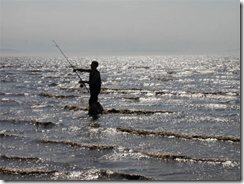
This time, it is our recreational sea anglers who face the full extent of their ridiculous bureaucracy which could have a considerable impact in the Eastern region which I represent.

It follows the announcement by the European Commission that it wants to impose quotas on recreational fishermen limiting the number of fish they may catch. They say it is intended to protect endangered species, such as cod, pollack and shark.

East Anglia has some of the finest fishing coastline in the country and sea angling, in particular, has seen a huge surge in popularity in the last decade. Now it is proposed that these quotas will be included in the total quota allowed to individual Member States. I just can’t see that happening.

Although I welcome reform of the Common Fisheries Policy, which has to date been bad for British fishermen, I believe this proposal is ludicrous and will be totally unworkable. Introducing reforms that will require further micro-management from image Brussels will only exacerbate the present problems. To me, this is totally unworkable and cannot be managed.

To propose regulations that target an innocent minority enjoying his leisurely pursuit is only going to alienate our electorate, particularly our anglers who genuinely enjoy fishing for pleasure, and make us a laughing stock. It will complicate current legislation and I shall vigorously oppose it.

When will Brussels realise that this heavy handed approach will not only result in a bureaucratic nightmare if it becomes law, but would actually do very little to meet its objectives in the recovery of fishing stocks, as well as damaging tourism in these coastal regions. That is something I certainly do want to see happen in East Anglia.

I believe if the European Commission is serious about wanting to protect our fish stocks, it should launch a total and effective review of the CFP, and not target the harmless recreational sea angler.

*"Some folk want their luck buttered," Thomas Hardy once said.  And the luck for EU farmers seems to be getting better.  This week it was announced that the EU is buying 30,000 tonnes of unsalted butter to put into cold storage, as well as up to 109,000 tonnes of milk powder. imageJust so you understand exactly the full extent of this, this weight is around the same as 75 jumbo jets. Inexplicably, this is happening at a time when the EU is committed to wholesale reform of its Common Agricultural Policy (CAP), resolving the problems that had led to the now infamous "mountains" and food and "lakes" of oil and wine, and is a massive step backwards.

The reason given for this extraordinary action is protection. EU farmers have suffered from a massive drop in demand in their main butter markets (especially in Russia as a result of the crash of the rouble) which in turn has resulted in a price crash. This action undermines all our efforts to move away from the protectionist policies of the past.

At a time of ongoing financial crisis, we should be fully liberalising markets and placing Europeans on an equal playing field with our competitors. We are, in effect, artificially supporting farmers by inflating the market price for these commodities. In my opinion farmers, would much rather turn a profit in a system that is both free and fair. For far too long the EU has controlled prices to the detriment of the farming communities of less developed nations who are desperately trying to make a living, but were forced out of a closed EU market.

Currently the WTO is trying to complete the Doha round of talks launched in 2001, a round that is specifically designed to open up world trade by bringing down this kind of non-trade barriers that have frequently distorted world markets in the past. At its peak, the butter surplus in Europe was a massive 1.2 million tonnes, and it was only in 2007 that the EU was finally able to do away with this "mountain" – an event that received much publicity. I was naturally shocked and dismayed when I learned of this development.

For this reason, I was most encouraged by the visit of the Czech presidency to the European Parliament’s Trade Committee last week. With the election of President Obama across the pond, many in the EU are worried that he too may resort to protectionist policies to artificially shield America from the effects of the global slowdown at the expense of everyone else. While the new Obama administration’s policies are yet to fully emerge, our Czech colleagues assured us that they will continue the EU’s free trade policies. They were adamant that lessons from the 1930s recession had to be heeded – namely that protectionism will only make things worse for everyone – prolonging the effects of the global economic downturn.

January 26th, 2009

Who can bail out the charities?

I have just signed up for an excellent one-day conference aimed at helping charities overcome some of the huge challenges they face today in order to survive.

I am attending in my role as chair of trustees for Headway Cambridgeshire, which imagesupports those with an acquired brain injury, and their carers.

Surely never before has the need for charities been greater, particularly those aimed at helping the most vulnerable sections of our community, including battered wives and abused children, the disabled and our increasing elderly population. Let’s not forget the soaring demand for financial advice provided by the Citizen’s Advice Bureau, often a first stop for those in debt who don’t know where else to turn.

This conference is really timely: those charities that didn’t sink from the Iceland bank collapse today face considerable competition for grant funding. Many charities are losing out financially because Lottery funding which they previously used is being diverted to pay for the London 2012 Olympics.

As a trustee, I have a huge responsibility to Headway Cambridgeshire to ensure it remains financially secure and  continues to provide value for money for its service users. Many charities are a vital lifeline and their survival is crucial.

This article asks the right question: if the government can bail out the banks, who is going to bail out the charities? Isn’t it in our interest as a society to save them?

The conference has a great line up of speakers. I shall be thrilled to meet Channel 4 news presenter Jon Snow, whose refusal to wear a poppy on air led to me making my TV debut! He is its keynote speaker.

There will also be UK and USA experts providing advice on the strategic use of charity communications to maximise incomes.  It is designed to help charities to make news, mobilise support, raise funds and campaign effectively. Knowledge in all these areas is crucial in order to survive.

Full details of the speakers can be seen on this link.

The conference is being held on Wednesday, 18 March at Central Hall, Westminster and costs £146. Anyone interested can sign up here.

January 25th, 2009

Enjoying my new iPhone

My new best friend is very slinky and creative and never fails imageto  amuse me. I’m hoping she won’t get me lost either with her satellite prowess.

I’m talking about my fabulous iPhone which I have had for a week now and is simplicity itself.

Apple has to be credited for providing superb customer service to tempt buyers. I booked a personal shopping session in Cambridge and was shown the workings of the nubile mobile in fine detail. I went equipped with comparative info about the Nokia N96 which I  was also considering, and the salesman showed me the pros and cons of both models.

Since buying it, the store’s technical staff have moved over my old phone contacts on to the new iPhone Sim card – it was very fiddly – and I am booking a couple of personal training sessions to fully appreciate its fabulous features, which costs peanuts, only £79 for one hour’s tuition each week of the year.

Apple makes it easy to fully appreciate and enjoy their stylish products. It is so frustrating to have the latest technical gadgets and not know how to use them properly. They make sure you do get the most of it, which I find quite unique.

I’m looking forward to spending time on iTunes and downloading my favourite music, something I have been meaning to do for ages. I have already made a couple of purchases from the App Store.

image What amazes me is that whenever I pass by the Apple store in the Grand Arcade, Cambridge, it is always packed with people. Surrounding clothes stores and jewellers are empty, and mobile phone shops might have a couple of customers, but nothing compared to the Apple store. I can’t imagine their sales figures are down in this economic gloom because they are always so busy.

Having shared my iPhone enthusiasm with you I wonder what downloads you find the most fun, which ones do you recommend? What do you most enjoy about your iPhone?

I did fall in love with it after seeing Geoff’s when it first came out. I just hope we don’t get them mixed up when we meet up!

January 23rd, 2009

Sarkozy and the future of journalism

Is it just money down the drain?

I am a news junkie and love the printed media. But I love citizen journalism too and the social media.

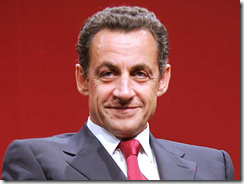
So I was fascinated to read that the a very generous French President Nicholas Sarkozy is pumping 600 million euros in emergency aid into France’s troubled newspaper industry. He has declared that every 18-year-old in France will get a free newspaper of their image choice to boost reading habits.

If I had the time, I would love to do a vox pox of our British 18-year-olds and ask them what newspaper they would read every day for a year if they had a similar choice.

Sarkozy’s plan seems very bizarre to me. If an 18-year-old hasn’t already developed finely tuned reading habits, a daily read of the Sun, Star or Mirror is unlikely to further stimulate their literary potential. How many of our teenagers would choose to read the traditional high brow press instead?

Interestingly, Sarkozy has also extended tax breaks for investors in online journalism and said the state would double its advertising in print and online papers, as well as allowing investors outside Europe to take higher stakes in French titles.

Maybe Sarkozy feels some personal responsibility because the image public’s trust in the French media is at an all-time low as politicians are said to rewrite their own interviews for publication, with the president’s powerful business friends, from construction to arms manufacturing, own several major papers or TV stations.

The fact is that the the British newspaper industry is collapsing, particularly in the regions, they are making catastrophic reductions in the newsroom.  I met a former journo hack today who has volunteered for redundancy in Cambridge. She was told that future journalists will be known as "aggregators". What an ugly word that is. One can only imagine what it means, and I shudder at such a thought. But it sadly confirms the worst fears for journalists – that the quality of news a publication provides is second to advertising revenue. The spirit of creative journalism is dead. I know this is not new, but….

Journalists are idealistic and free spirited by nature, I know I am. That’s why the internet is our perfect domain. That is why citizen journalists like Richard Taylor who take the trouble to attend local council meetings will flourish because the local press has sacked half its reporters and is unable to keep its communities informed of democratic procedures and decisions.

My heart goes out to journalists, especially those at The Press in York who want to buy out its Newsquest ownership. Its brave journalists have stated:

"This chapel (union members) believes in the importance of local journalism and believes that Newsquest’s continued ownership of The Press and Gazette and Herald is detrimental to the newspaper, to the quality of journalism in York and North Yorkshire, and therefore to the local community.

"This chapel laments and opposes the repeated cutbacks made by Newsquest, and believes its profit targets to be excessive and damaging to quality and reputation of the papers.

image"This chapel formally requests that executive officials of the National Union of Journalists obtain a market valuation of Newsquest (York) Ltd and a market valuation of Newsquest North East; explore ways of ending Newsquest’s ownership of The Press and the Gazette and Herald; report back to the  chapel accordingly, with recommendations; and contact figures  in the local business and economic community, to ascertain interest in a buy-out."

I wonder if any of this is of interest to our Culture Minister Barbara Follett? Is she aware of the number of journalists losing their jobs in East Anglia, an area she also represents as Minister for the East of England?

Does she share the same concerns of Sarkozy for British newspapers readers?

January 21st, 2009

Pesticides, Russian oil and the Czech presidency

This is all in a week’s work for my MEP Robert Sturdy.

Please read and enjoy his latest report from Strasbourg:image

R.I.P the British carrot. Yes, the nation’s third favourite culinary vegetable is quite possibly facing the chop. The big news came last week when the European Parliament voted for tough new rules governing the use of pesticides in European crop farming. The Parliament voted to support a compromise package negotiated between the Commission, the Council and MEPs with 577 in favour, 61 against and just 11 abstentions. For me, this has been one of the most important issues in my 14 years as an MEP and the vote came as a massive disappointment, not only for myself but for East Anglia’s farmers, gardeners, grounds men, consumers and everyone else who has contacted me over the past few months expressing their considerable concerns regarding this Directive.

Not only is it poorly thought through, but the EU is blindly introducing new legislation when it is unaware of its vast implications and consequences. It was for this reason that I tabled an amendment on behalf of Conservatives in the European Parliament calling for an impact assessment study to be conducted so that everyone would have been better informed as to precisely what consequences we could expect. Lamentably, the European Commission did not see this as necessary. Furthermore, my attempts to let members vote specifically on the issue of an impact assessment failed because of absurd EU administrational controls.

I must be clear and unequivocal; my top priority has and will always be removing those chemicals that are scientifically proven to be harmful to human health or to the environment. What this Directive fails to do is to strike the right balance between protecting the consumer, rural residents and farmers from the worst effects of the most harmful pesticides, while also ensuring that the right tools are available for farmers to produce safe, high quality food. Pesticides are already among some of the most heavily regulated chemicals in the EU, and I am worried that these new restrictions could lead not only to reductions in both crop yields and quality, but to a rise in food prices for staples such as potatoes, bread and broccoli, as well as the British carrot. However, there was some consolation as the strong position led by me and adopted by Conservative MEPs in Brussels and Strasbourg has significantly watered down the Directive which was first presented to us 12 months ago.

Another issue grabbing the headlines was the ongoing dispute between the Ukraine and Russia over the supply of natural gas. As the row continued, the European Commission threatened legal action against Russia. The EU, which receives large amounts of its gas through Ukrainian pipelines, has been dragged into the row as a collateral victim of Russian attempts to use its huge reserves of this vital resource as a diplomatic weapon.  This is more than simply an exchange of hot air between the two Eastern European neighbours. Russia is attempting to drive a wedge between the Ukraine, a possible future member of the EU, and Europe. This crisis has shown we can no longer rely on an unpredictable and volatile trading partner to provide us with the vital resources our economy requires. I strongly believe that the time has come for Britain to diversify its energy supplies and improve energy efficiency, something that we can all contribute to in the home.

The Czech Republic, in their new role as President of the European Council have made this a central issue of their mandate. They have set themselves an ambitious set of priorities, or the three E’s as they call them: economic improvement, energy and economic improvement. Early signs have been promising; the Czechs certainly seem to be masters of the art of diplomacy, even if their artworks have caused diplomatic fallout. Of course, the economic crisis forms a central part of their agenda, and so far they have thrown their weight behind supporting sensible measures to ensure that the slowdown is tackled. All the indications show free trade is to be championed, something that I wholeheartedly agree with, while protectionism will be shunned- we must not repeat the mistake of the 1930s that led to the worldwide great depression.

Lastly, some of you may remember before Christmas that the European Commission moved to limit the amounts of alcohol and tobacco which the so called "booze cruises" could bring back from the continent to England, something with which I was greatly disappointed. There has been another development on this front, with the Commission now encouraging the British authorities to spy on their customers who may be taking advantage of their single market rights by making such trip to the continent. The Labour government and Labour MEPs have consistently attacked cross-channel shopper and they are now treating honest people as criminals. For me this represents a waste of resources which should be deployed to tackle genuine smuggles of drugs, people and counterfeit goods.

January 20th, 2009

Good luck President Obama

image

Good luck Mr President. You will need  more than luck to live up to the high expectations of world leaders who are pinning their hopes on you improving relationships globally, as well as your countrymen who voted for change.

You are expected to be a miracle worker and deliver.

Your qualities, intelligence and ability to connect have inspired millions of Americans who are today witnessing today’s historic inauguration of America’s first black President.

I would have loved to have been there to join in the celebrations.

Good luck Mr President. image

image


Having listened to President Obama’s awesome speech, what struck me most was how his words could never be said by Gordon Brown. His tired government has had its day to deliver what it promised and failed. These words which offer so much hope to fulfil so many dreams could only be said by fresh blood with a new vision, energy and determination to succeed:

"For everywhere we look, there is work to be done. The state of the economy calls for action, bold and swift, and we will act – not only to create new jobs, but to lay a new foundation for growth. We will build the roads and bridges, the electric grids and digital lines that feed our commerce and bind us together.

"We will restore science to its rightful place, and wield technology’s wonders to raise health care’s quality and lower its cost. We will harness the sun and the winds and the soil to fuel our cars and run our factories. And we will transform our schools and colleges and universities to meet the demands of a new age. All this we can do. All this we will do."

January 18th, 2009

BNP shamed for subversive booking in Norfolk

The far right British National Party has been named and shamed for using subversive tactics when booking a meeting room in Norfolk under the pseudonym Broadland Historical Society.

An email was sent to sent to members planning to attend the meeting at the White Horse in Trowse, near Norwich stating: “We are in the downstairs meeting room. Use the entrance in the car park… The meeting has been booked under the name Broadland Historical Society. Please be discreet when in the bar area.”

The meeting was due to be attended by the party’s eastern area regional organiser Eddy Butler to discuss upcoming image European and county council elections. Perhaps organisers were remembering what happened last year when police were called to a BNP meeting at Stoke Holy Cross, near Norwich, attended by controversial leader Nick Griffin. Villagers had already objected to his presence and vandals struck, smashing windscreens and damaging cars with paint, while the meeting took place.

An indignant Andrew Coleman, landlord at the White Horse cancelled the latest booking the moment he was warned of the group’s true intentions.

“A lot of groups use our facilities and, when they made the booking, this seemed like a perfectly legitimate organisation. We can’t get involved in these kinds of politics, particularly as they weren’t open and honest about it from the start. It’s not the type of people you want your pub to be associated with."

Yet the home page on the BNP’s website incongruously boasts that it "believes in telling the truth, even if it is sometimes uncomfortable to hear or offensive to those who would rather bury their heads in the sand than face real problems in our society."

In a democracy, every political party is entitled to its own views, but these subversive tactics demonstrate that the BNP is cowardly at the most basic level when it comes to promoting its vile, extremist right wing views.

I certainly think it needs to do a re-write on its homepage if it is too afraid to tell the "truth" when booking a meeting room. Would you rent them a room?

January 13th, 2009

UK govt urged to fight pesticide ban

image Disappointingly, Conservative MEPs, even with the support of the UK government and NFU, were today unable to prevent a ban on the use of a large number of pesticides in the European Union.

The ban was approved by the European Parliament today, despite warnings from my MEP Robert Sturdy that an overzealous approach would reduce yields of a number of foods including carrots, cereals, potatoes, onions and parsnips, whilst pushing up prices for consumers.

He said afterwards:

"This law will drive up the cost of the weekly food shop at the worst time for British families.

“We do need strong restrictions on pesticide use but it should be based on sound science, rather than on the whim of politicians. There has been no balance whatsoever in the parliament’s position. MEPs have failed to see pesticides as necessary tools in maintaining our crops.

“Many of the products on the market today are safe when used correctly, and have been around for years. Without crop protection products, our food supplies will be volatile at a time when food security is rising up the political agenda.

“The Labour government has expressed platitudinous concern about this directive, but it has failed to put the case nearly as strongly as it should have.

“It is ludicrous that such a plan would be brought into law without an impact assessment to gauge its consequences. The only hope we have is for a last-ditch effort by the government to demand we finally get an overall picture of how food production will be affected across the EU.”

Let’s watch this space and see if the British government can redeem itself by getting that overall picture. It’s surely crucial to have that kind of information before making the final vote.

Why don’t other European MEPs share the same common sense view that any ban on pesticides should only be based on sound science?

January 9th, 2009

The changing face of Britain’s High Street

The future of Britain’s High Street is in our hands. It’s no good moaning if we lose our unique and distinctive independent shops, including those friendly book stores with heaving shelves.

imageLike me, you might have a favourite book shop you would hate to lose. An independent book shop has a totally different atmosphere to a chain. It is much cosier and staff are always well informed. When I visit my local bookshop, Topping, of Ely, time always flies by as I  become absorbed in scanning so many tempting titles.

All credit to ace author Richard Havers who has launched a stunning blog about great independent book shops – and wants to hear your personal recommendation.  He is keen to promote book shops which are “run by people who are passionate about books, not products”. Do visit his site and let him know.

*My sister is an increasingly rare breed. She is an independent retailer selling High Street ladies fashion. She has been doing it since leaving school at 18. She is keeping her head above water, but Wisbech 001 like other independent owners, faces stiff competition from supermarkets and websites. A couple of years ago she thought about selling up. When her loyalcustomers heard about this, they started a petition pleading with her to remain open. She was very touched and gave in to their requests. Going into Rosalind’s shop in Wisbech, Cambridgeshire is a unique experience, as any of her customers will tell you.

She is pictured here with my MEP Robert Sturdy. He visited her shop once when we highlighted imported goods.

*I found this article really interesting in The Times, where a retail research analyst predicted the future of Britain’s High Street. I quite like the idea of Japanese-style tea houses replacing some of our coffee shops with a new drinks emphasis on health and well being.

I can quite believe that future High Street pharmacies will offer health services such as dental and eye care. A pity something couldn’t have been done along the same lines to save our struggling post offices.

Do you have a favourite independent shop? How do you think the High Street will evolve over the next 10-20 years?

January 7th, 2009

My one weakness, and other news

I’ve been unashamedly stocking up on 100 watt light bulbs image because I can’t live image without them in my office. I only use one, or two at the most,  in my house. I need them because my eyesight is not brilliant and I can’t function in a dimly lit room.

I first wrote about the withdrawal of our traditional light bulbs back in February 2007. And now, two years later, there are still many unanswered questions about how effective the green replacement will be.

I am not a gas guzzler. I am an avid recycle. I switch off all the lights when I leave the room and live a very green life. But I need a good light when I work, otherwise I am squinting all the time. I have a lazy eye and have worn glasses most of my life for reading and writing. A good overhead light is essential.

We do use green light bulbs in our house. But how many will it take to provide the equivalent of a 100 watt incandescent light bulb hanging from my ceiling?

It is my one weakness. Can I not at least trade it against something else that emits carbons as I have scored more than a few brownie points with my diligence in other eco areas?

*On a more positive note, I went to Great Ormond Street Hospital today with David . The great news is that as he has only had one incident of chronic pain in his jaw in the last year, he was discharged after almost four years. He was in terrible, agonising pain when he was referred there and they gave him the best care and believed us when others didn’t.

THANK YOU, THANK YOU, THANK YOU, THANK YOU A THOUSAND TIMES TO ALL THE WONDERFUL STAFF AT GREAT ORMOND STREET HOSPITAL, AND DAVID’S WONDERFUL CONSULTANT PETER AYLIFFE.

*We then met up with David’s stunning girlfriend and had a lovely lunch together before I headed home to continue working on my book, while David travelled on to Stratford-on-Avon to meet her family.

There is great news with my book. My editor really likes what I have sent her, I’ve had fantastic feedback. I’m really excited about it, but I have another couple of weeks of hard slog to meet another deadline.

*David was a true gent and gave up his seat on the train this morning to an elderly lady so she didn’t have to stand and she didn’t even have the grace to thank him. She had such a sour face that it would curdle your milk. I’ve told him not to stop showing this kind of consideration to others. No-one else got up for her, none of the smart businessmen or other lads who sat nearby, they all ignored her while they hid behind their papers, fiddled with their mobile phones or busied themselves on their laptops. He showed them all that young people today can be a great credit to themselves.

Ciao for now. :-)

|